§ IRock, Castle and Conscience
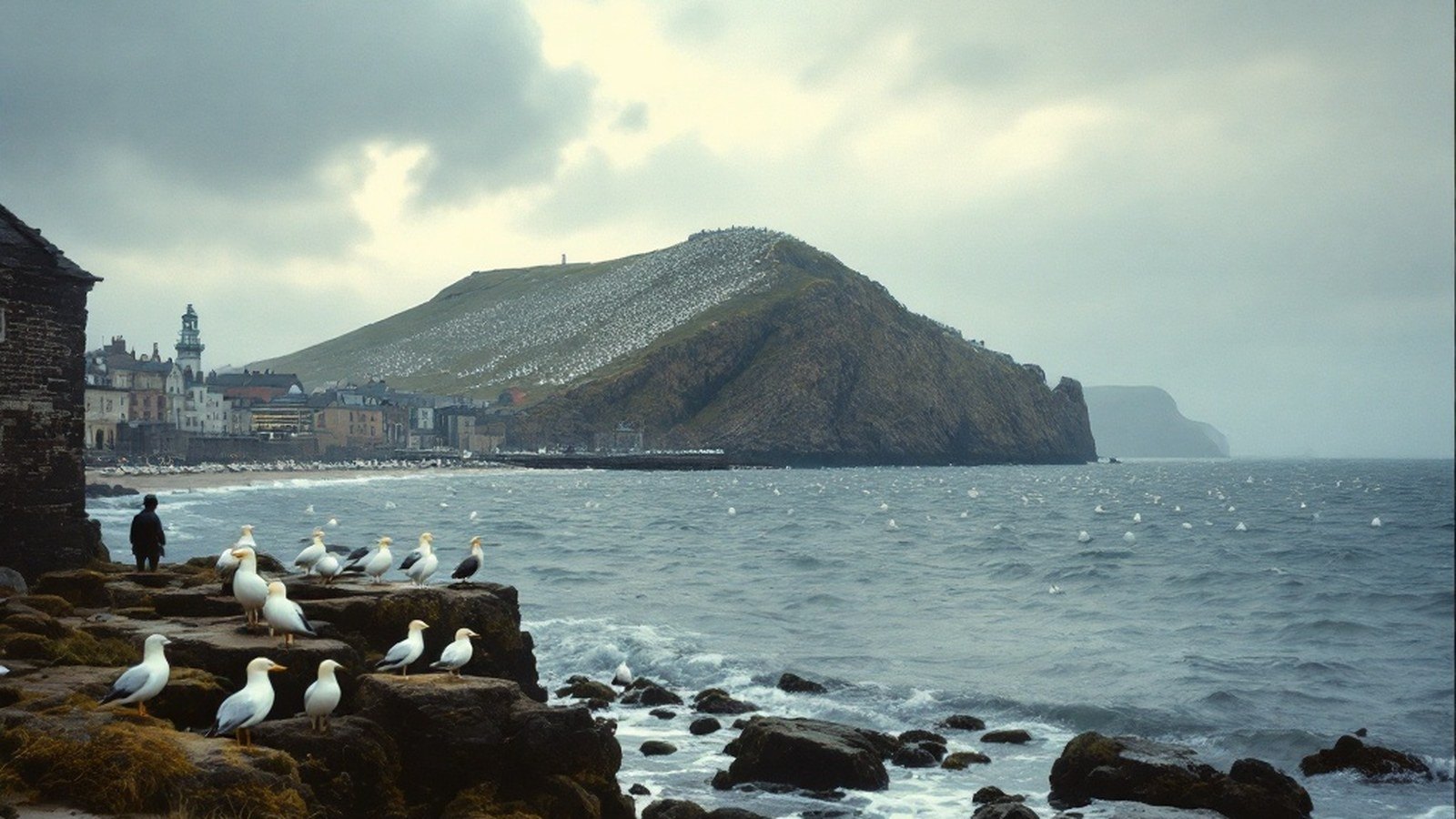
Rising some hundred metres from the Firth of Forth roughly three miles off North Berwick, the Bass Rock is one of those landforms that appears to have been placed there for effect. It has not: it is the eroded throat of a Carboniferous volcano, its black dolerite plug worn to a near-vertical stump by the slow work of the sea. From the shore it reads as a single white mass — not because of the rock itself, but because of the birds.
The fortress that clings to its southern face is older than any reliable record of it. A chapel dedicated to St Baldred, the early medieval hermit who is said to have inhabited the rock, was already a place of veneration before the castle was consolidated in the fourteenth century. By the late sixteenth the Bass had passed to the Lauder family, and its near-impregnable position had long recommended it to Scottish kings as a state prison. The crossing alone, in the unpredictable waters of the outer Forth, was deterrent enough.
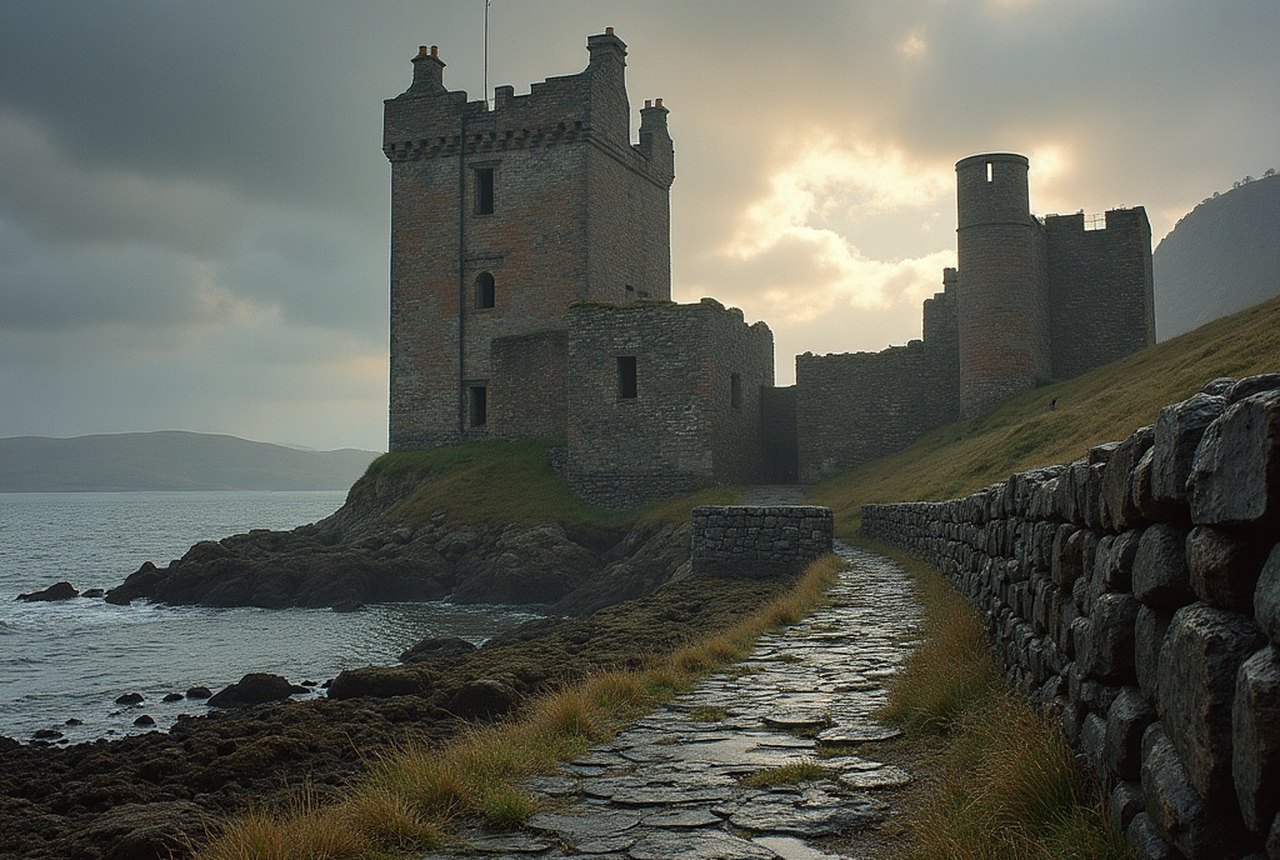
It was in the later seventeenth century that the castle earned its darkest reputation. After the Restoration of 1660, as Charles II’s government pressed the re-imposition of episcopacy on a resistant Scotland, those who refused — the Covenanters — faced imprisonment, transportation or death. A number of Covenanting ministers and laymen were held on the Bass in the 1670s and 1680s, among them the minister John Blackadder, who died there in 1685 after four years of confinement. The rock offered no comfort: cold, damp, cut off, it was a place of deliberate suffering. After the Glorious Revolution of 1688 the political tide turned, but the Bass had one further act of drama in it. In 1691 a small party of Jacobite soldiers seized the castle by a stratagem, holding it for the exiled James VII against William III’s forces — the last place in Britain to hold out for the Jacobite cause — before finally surrendering in 1694. The ruined walls and vaulted chambers that visitors see today, rising steeply from the landing jetty, are the ghost of that long garrison history.
§ IIThe Stevenson Light and the Gannetry
The lighthouse that occupies the rock’s lowest spur was built in 1902 to a design from the firm of D. & T. Stevenson — the family engineering dynasty that gave Scotland so many of its lights. It was automated in 1988, and its keepers’ cottages stand empty now, whitewashed and orderly against the rock face. The light serves shipping navigating the busy approaches to the Forth.
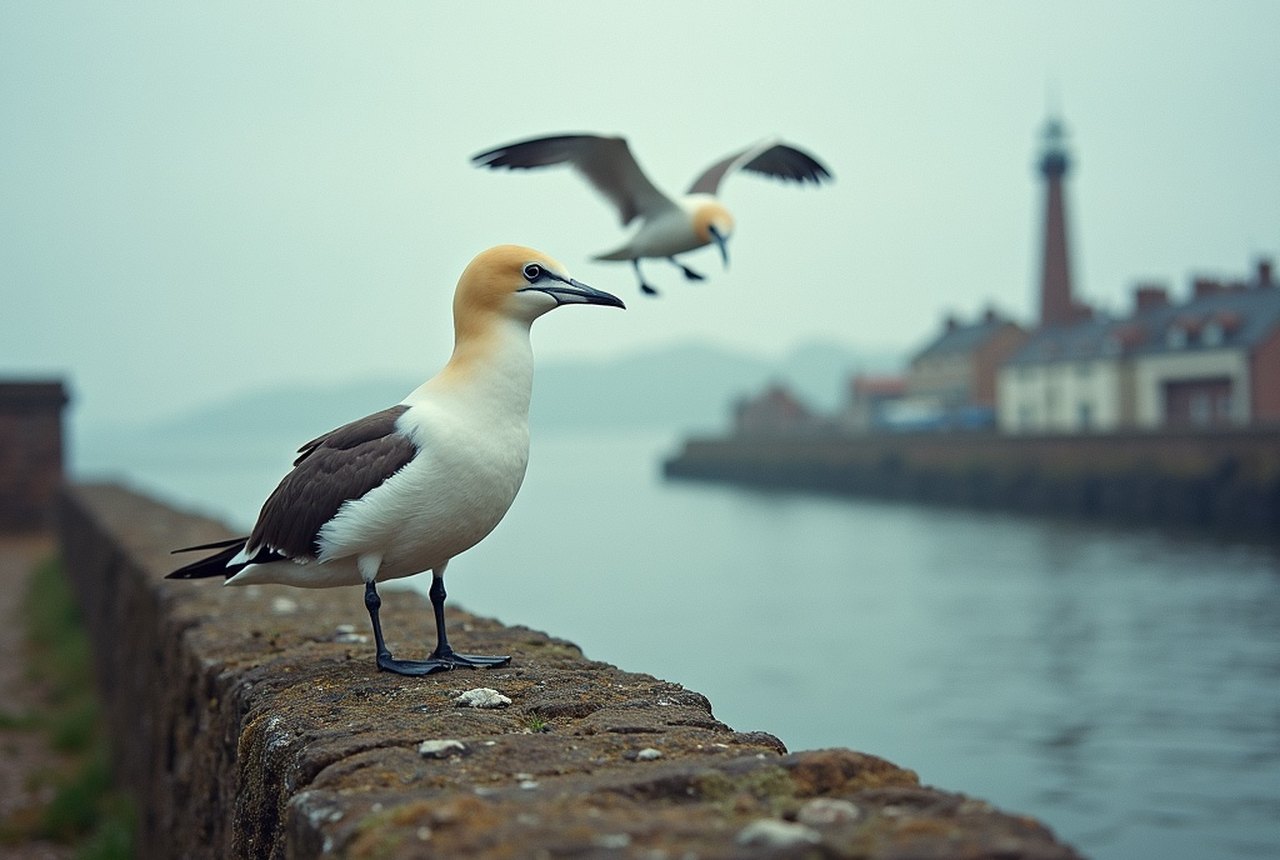
Above it, the rock belongs to the gannets. The Northern gannet’s scientific name, Morus bassanus, is a permanent memorial to this address: the Bass Rock is the type locality from which the species was formally described, and it has carried the bird’s identity in the taxonomy ever since. The colony — a gannetry, to use the correct term — is the largest single colony of Northern gannets in the world. Estimates of the breeding population run to well over 150,000 individuals at peak season, a figure that has grown substantially since the mid-twentieth century as the species recovered from historic exploitation. From spring through late summer the rock is in continuous, deafening occupation: a city of birds stacked on every ledge and outcrop, the air above it perpetually crossed by long white wings with black-dipped tips.
Gannets are spectacular hunters. From height — sometimes sixty metres or more — they fold into a near-vertical stoop and enter the water at speeds approaching a hundred kilometres an hour, a plunge-dive made possible by air sacs under the skin that cushion the impact. To watch this from a boat below the rock is to understand why naturalists have been writing about the Bass gannetry since the sixteenth century.
Boat trips from North Berwick allow close approach through the summer months; landing is restricted to protect the colony, but the smell and sound from the water are entirely sufficient. The birds are indifferent to observation. They have, after all, been here longer than the castle, and they have outlasted every jailer.
The lighthouse that occupies the rock’s lowest spur was built in 1902 to a design from the firm of D
In brief — a chronology
- c. 7th centurySt Baldred associated with the rock; chapel established
- 14th centurycastle consolidated on the Bass Rock
- 1671–1688Bass Rock used to imprison Covenanting dissenters
- 1685death of John Blackadder, Covenanting minister, on the Bass
- 1691–1694Jacobite soldiers hold the castle for James VII
- 1902Stevenson lighthouse built
- 1988lighthouse automated