The Dunbar child who scrambled the Lothian shore and grew up to change the American wilderness
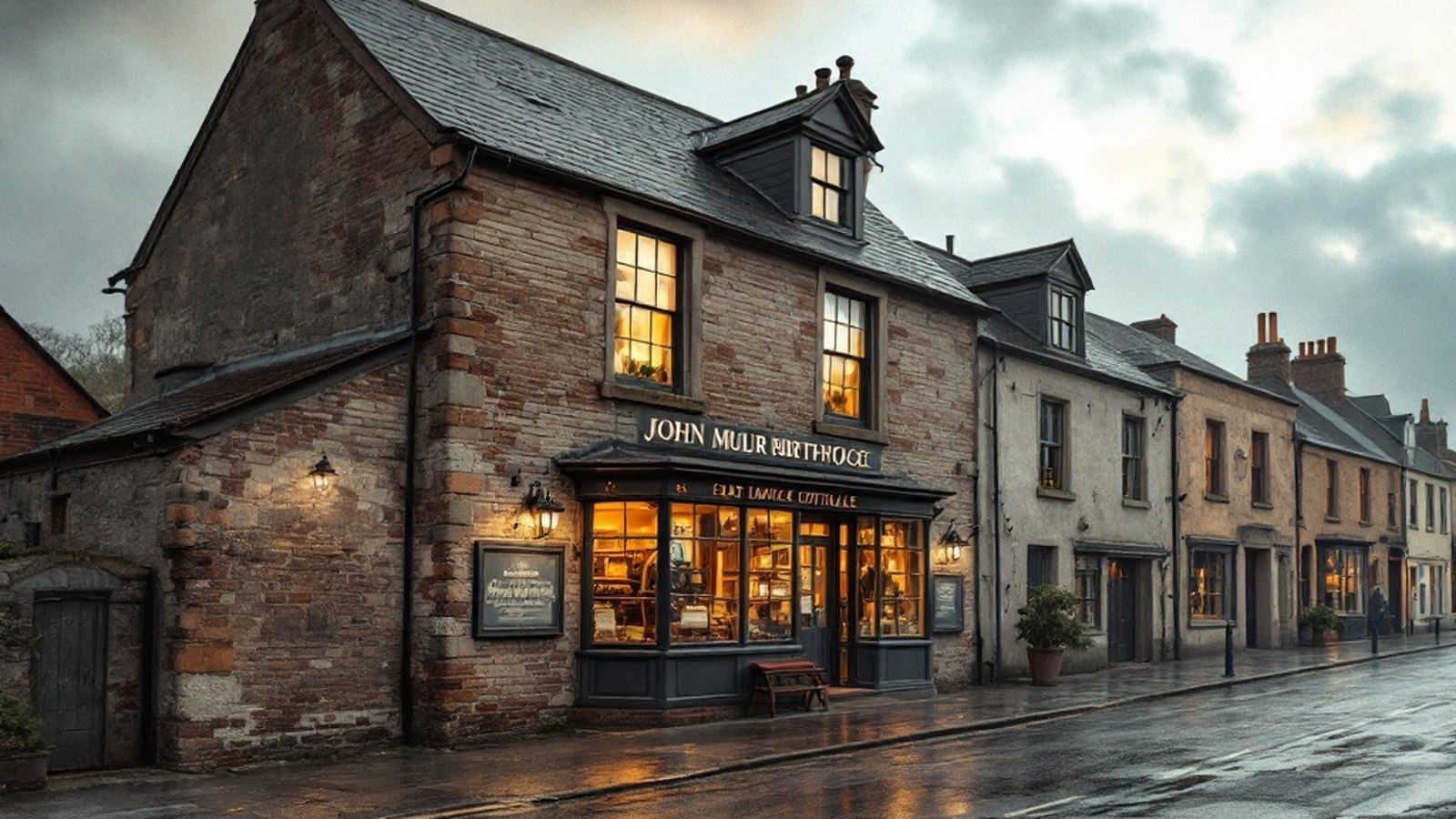
John Muir was born on 21 April 1838 at 126–128 High Street, Dunbar, the third child of Daniel Muir, a strict Calvinist grain merchant, and Ann Gilrye. The house still stands — a plain Scottish townhouse of no great architectural ambition, which makes it all the more remarkable as the birthplace of the man who, more than any other single figure, shaped how the modern world understands wild nature. The John Muir Birthplace, now managed as a visitor centre, preserves the building and tells his story through personal artefacts, correspondence and displays tracing the arc from Dunbar schoolboy to Yosemite campaigner.
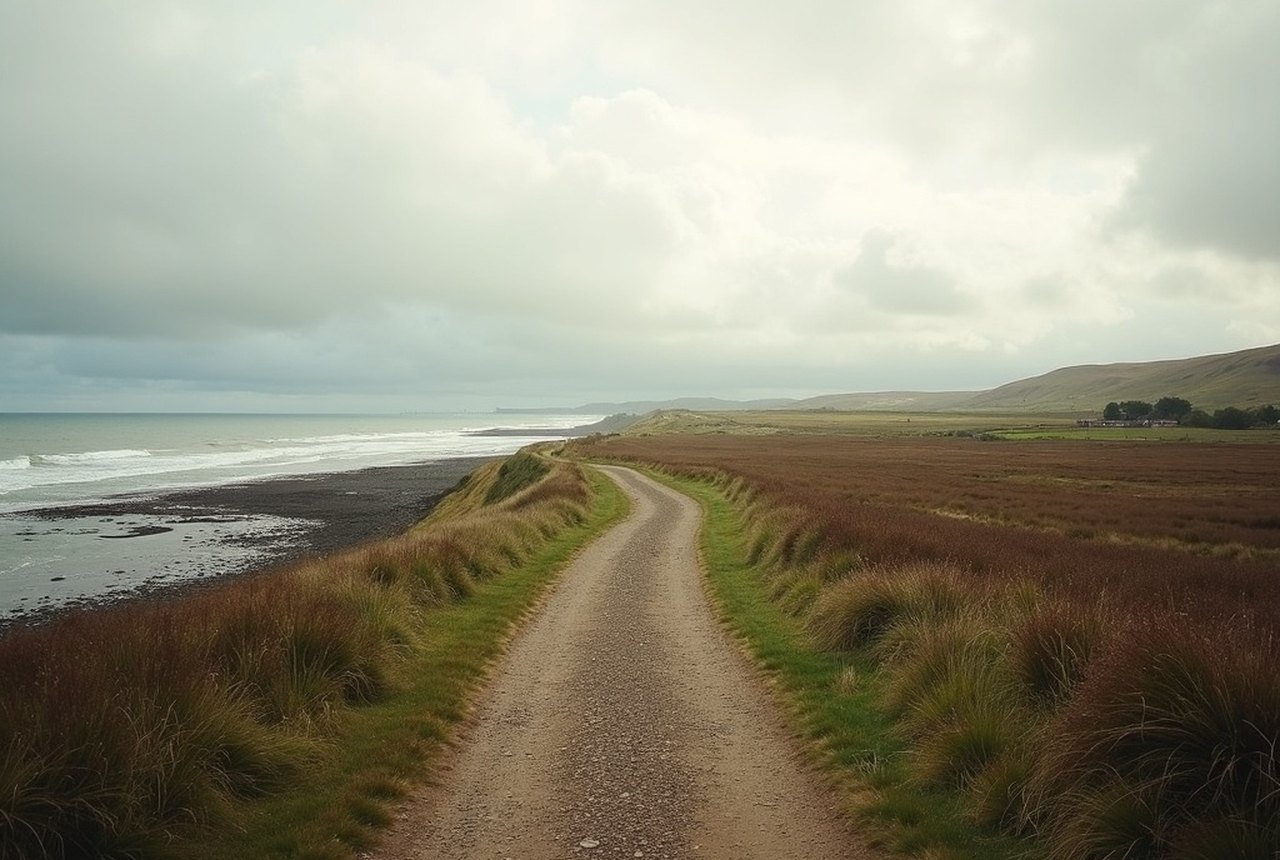
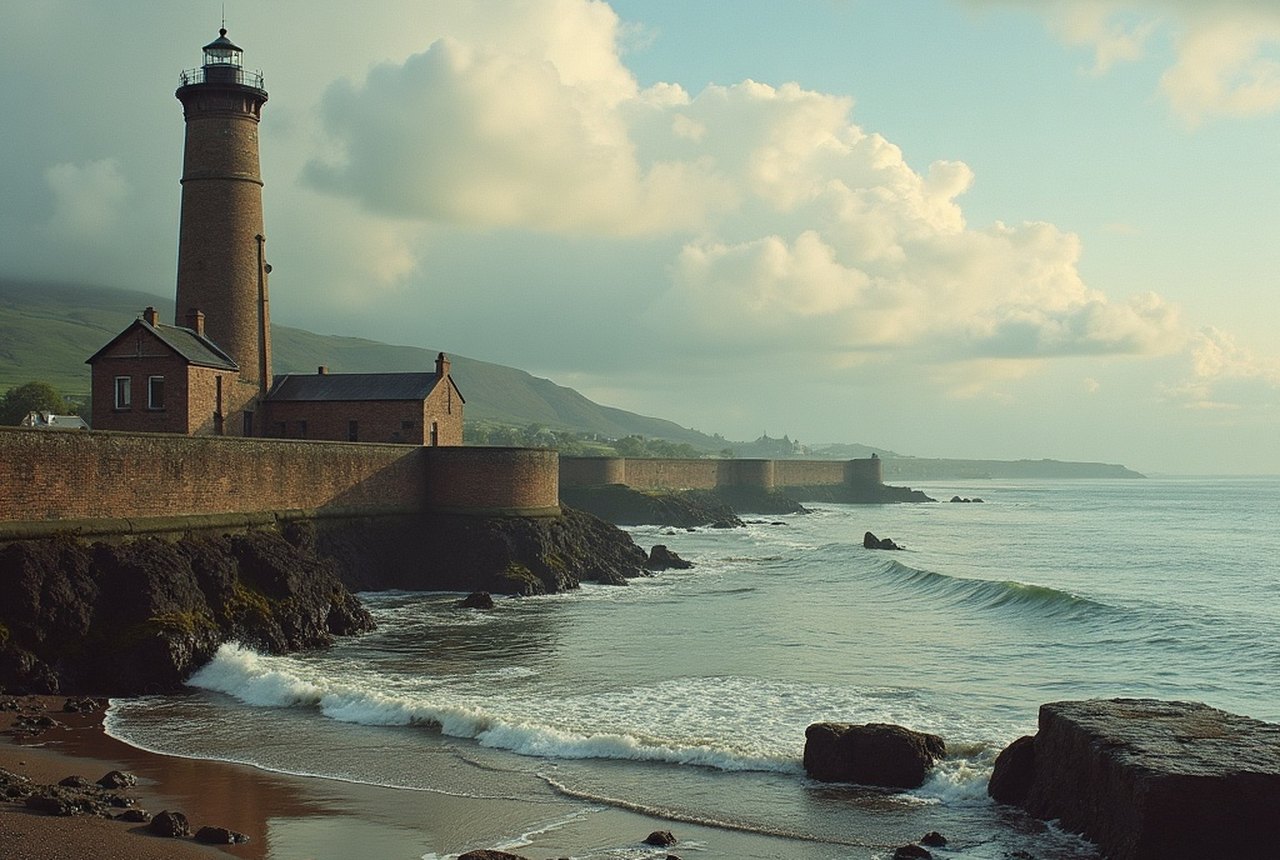
The East Lothian into which Muir was born was a county of contrasts: fertile arable ground behind the coast, coal beneath it, and a shore of extraordinary variety — sea stacks, volcanic rock pools, the hump of the Bass Rock riding the Forth, and beyond it the cold clarity of open water. Muir spent his early years ranging this landscape with the freedom that an indulgent town and an outdoor temperament allowed. He scrambled on Dunbar Castle’s ruined walls above the harbour, swam in the North Sea regardless of season, and roamed the Lammermuir Hills to the south. Long before he had the vocabulary of ecology or the concept of wilderness preservation, the land was forming him.
His formal education was at Dunbar Grammar School, where rote learning and the tawse were the principal pedagogical tools. He proved sharp enough academically, but it was the unscheduled hours that mattered. The coast between Dunbar and the White Sands gave him tidal pools to examine and cliff faces to climb; the walk south toward Doon Hill and the Lammermuirs gave him open upland. The habit of close observation — of recording exactly what a plant or a rock or a bird was doing — appears to have been native to him, not acquired later in Wisconsin or California.
§ IIDeparture and Legacy
In 1849, when Muir was eleven, Daniel Muir emigrated the family to Wisconsin, settling near Portage to farm. The rupture was absolute: Scotland, the High Street, the shore, the school friends — all exchanged for the American frontier. What the Wisconsin years added was hard physical labour and the vast flatness of the prairie, against which memory of the Lothian coast must have burned with particular clarity. Muir went on to the University of Wisconsin at Madison, then embarked on the long walks and botanical surveys that eventually brought him to California’s Sierra Nevada.
His campaigns there — for the preservation of Yosemite, for the creation of a federal system of national parks, for the founding of the Sierra Club in 1892 — made him the most consequential conservationist of his era. The Yosemite National Park Act of 1890 owed much to his advocacy, as did the broader culture of American wilderness protection that descended from it. He wrote prolifically: books, essays and thousands of letters, all marked by the same precision of observation that he had first practised on East Lothian rock pools.
Muir died in Los Angeles on 24 December 1914. Scotland, characteristically, was slow to claim him. The birthplace on the High Street was eventually restored and opened as a heritage centre, giving Dunbar a focus for the considerable transatlantic pilgrimage his name still draws — Americans arrive on the High Street with something close to reverence, looking for the house that gave them their national parks.
The John Muir Way, a long-distance walking and cycling route, runs 134 miles from Helensburgh on the Clyde to Dunbar’s harbour, ending at the town that started everything. It is a fitting memorial: a route that moves through coastal and inland landscapes, demanding close attention to terrain and weather, asking walkers to look hard at the country they pass through. That, more than any bronze statue or heritage plaque, is what Muir would have recognised as the right kind of tribute.
In 1849, when Muir was eleven, Daniel Muir emigrated the family to Wisconsin, settling near Portage to farm
In brief — a chronology
- 1838John Muir born at 126–128 High Street, Dunbar
- 1849family emigrates to Wisconsin; Muir aged eleven
- 1890Yosemite National Park Act passed
- 1892Sierra Club founded
- 1914Muir dies in Los Angeles
John Muir
Naturalist · born Dunbar, 21 April 1838
The boy who scrambled on the East Lothian shore became the father of America’s national parks and a founder of the Sierra Club. His birthplace on Dunbar High Street is kept as a museum, and the John Muir Way crosses Scotland in his name.