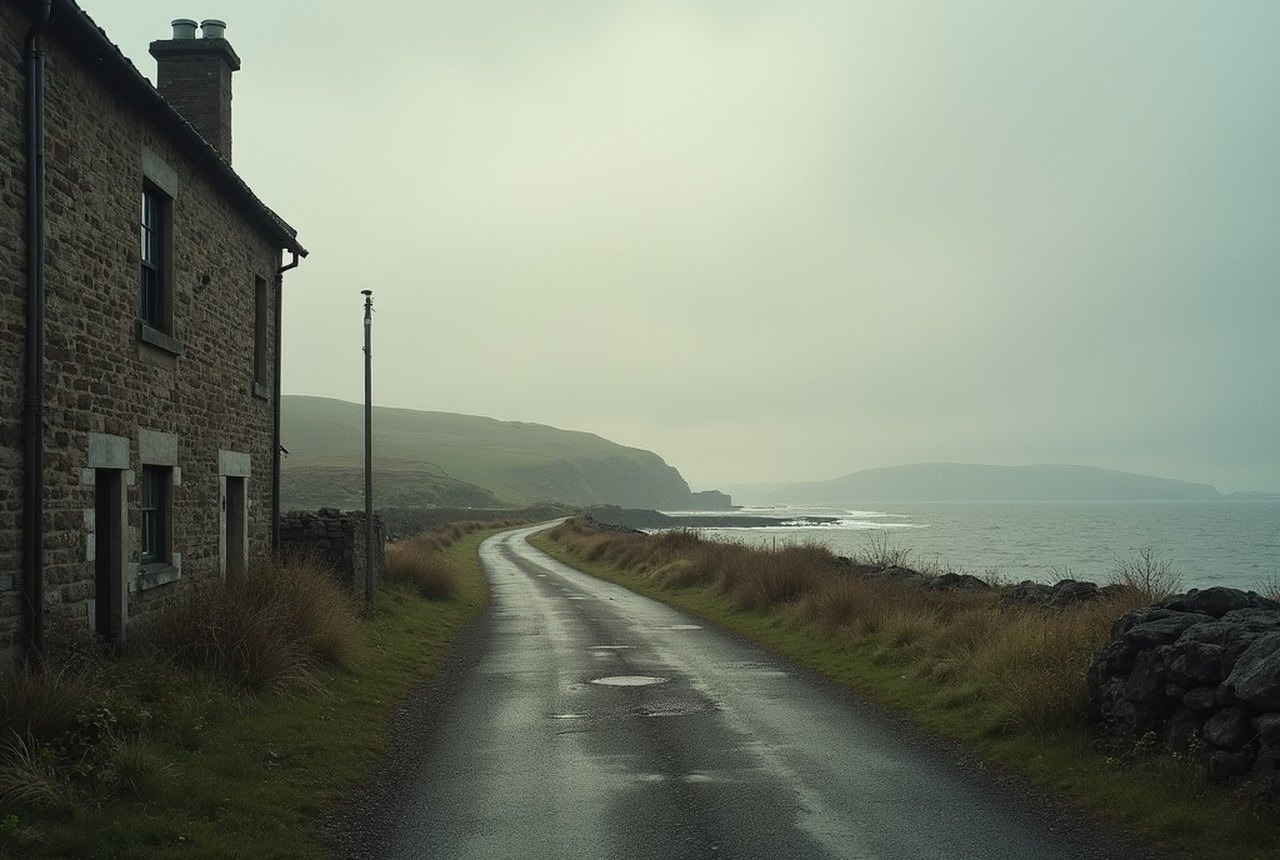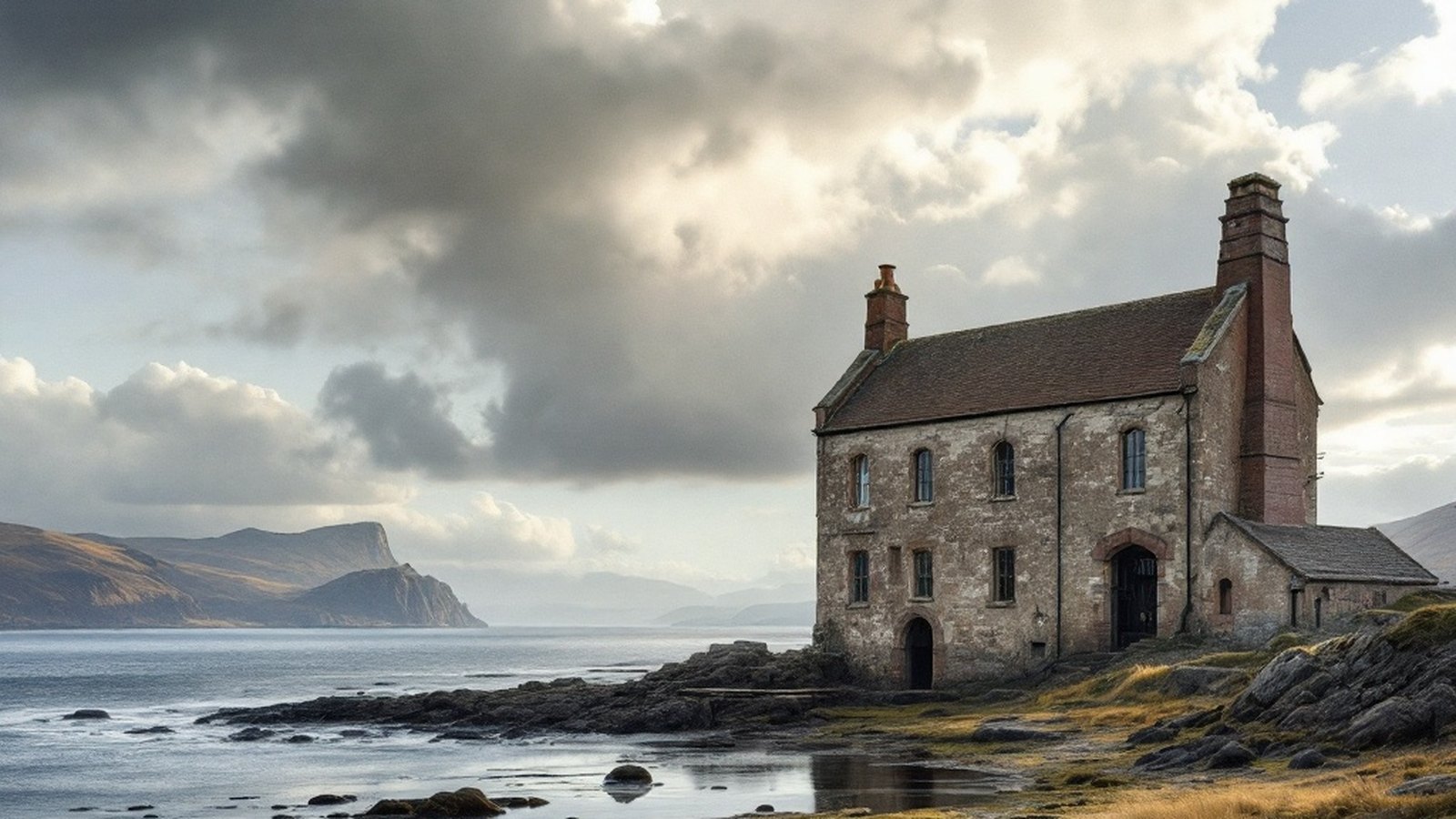
On the southern shore of the Firth of Forth, between Prestonpans and Musselburgh, a low headland carries a freight of history that few sites in Scotland can match. Prestongrange Industrial Heritage Museum stands on ground that has been worked, fired, pumped, salted, potted and mined across eight consecutive centuries. The great Cornish beam engine still occupies its engine house at the water’s edge, its massive cylinder cold and still since the colliery closed in 1962. Around it, brick kilns, a beehive kiln, saltpan remains and the ghost of a pottery compose one of the most layered industrial landscapes in the country. Prestongrange is not a museum that has assembled its collection from elsewhere; almost everything it shows happened exactly here.
§ IIFrom Monks to Mineral Rights: the Medieval Beginning
The first coal workings at Prestongrange are documented to 1184, when the monks of Newbattle Abbey — a Cistercian house founded in Midlothian — held rights to dig coal on this foreshore. It is among the earliest recorded coal-mining operations in Scotland, and quite possibly in Britain. The monks were not romantics: the coal fired their salt-panning, a process in which seawater was boiled in large iron pans to extract salt, an operation that dominated the Forth shore for centuries and underpinned the regional economy long before the age of steam. Salt from the Firth was taxed, traded and shipped; its production demanded fuel in industrial quantities, and coal and salt at Prestongrange grew up together, each sustaining the other.
Ownership of the ground shifted over the centuries — from ecclesiastical to secular hands at the Reformation, through various proprietors, and eventually to the colliery companies of the Victorian era — but the digging barely paused. By the eighteenth century the shallow seams worked by the monks had been succeeded by deeper shafts, and the perpetual problem of keeping those shafts clear of water had become the central engineering challenge of the site.
It is among the earliest recorded coal-mining operations in Scotland, and quite possibly in Britain
§ IIIThe Cornish Engine: Monument on the Shore
The answer, in its most magnificent surviving form, is the Cornish beam engine — the centrepiece of the museum and one of the finest preserved examples of its type in Scotland. Cornish beam engines were pumping engines of exceptional power and efficiency, developed in the tin and copper mines of Cornwall and exported across the industrial world wherever water threatened to drown a working mine. Prestongrange’s engine was installed in 1874, supplied by the Cornish engineering firm of Harvey and Company of Hayle, and set to work pumping water from the colliery workings at a rate that could keep the mine viable where earlier, smaller engines had struggled.
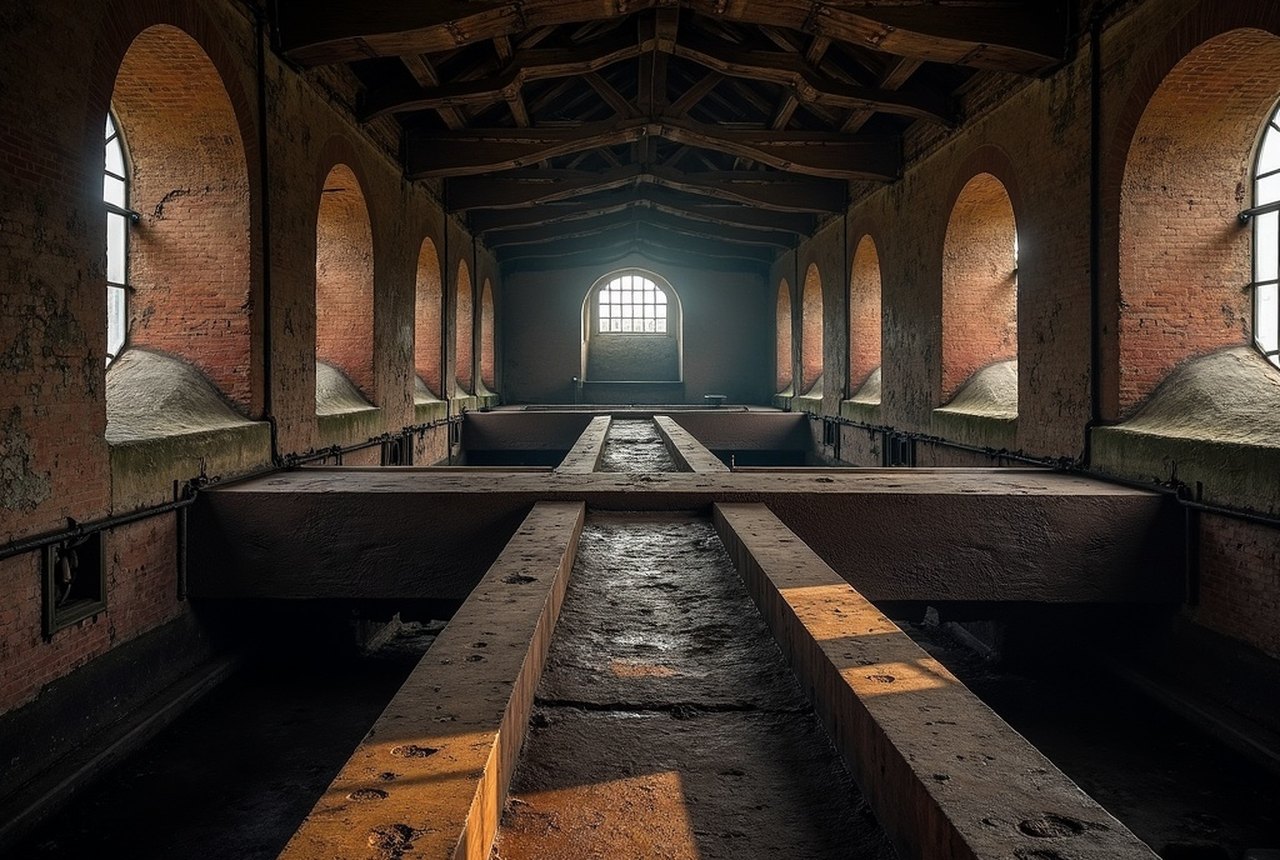
The engine house that contains it is a massive structure of dressed stone, built to take the enormous stresses transmitted through the beam. The beam itself — the iron see-saw that translates the up-and-down motion of the steam cylinder into the reciprocating action of the pump rods — spans the engine house at high level, a thing of considerable visual power even inert. The cylinder, at 70 inches in diameter, gives some measure of the forces involved. Harvey and Company built engines of world renown, and the Prestongrange example is a direct expression of that Cornish engineering tradition transplanted to a Scottish colliery shore. It ceased operation when the colliery closed in 1962, and has been preserved in situ ever since — the engine house itself a listed building, the engine a Scheduled Ancient Monument. To stand inside is to understand, physically, why Victorian engineers were sometimes described as the cathedral-builders of their age.
§ IVBrickworks, Pottery and the Uses of Colliery Waste
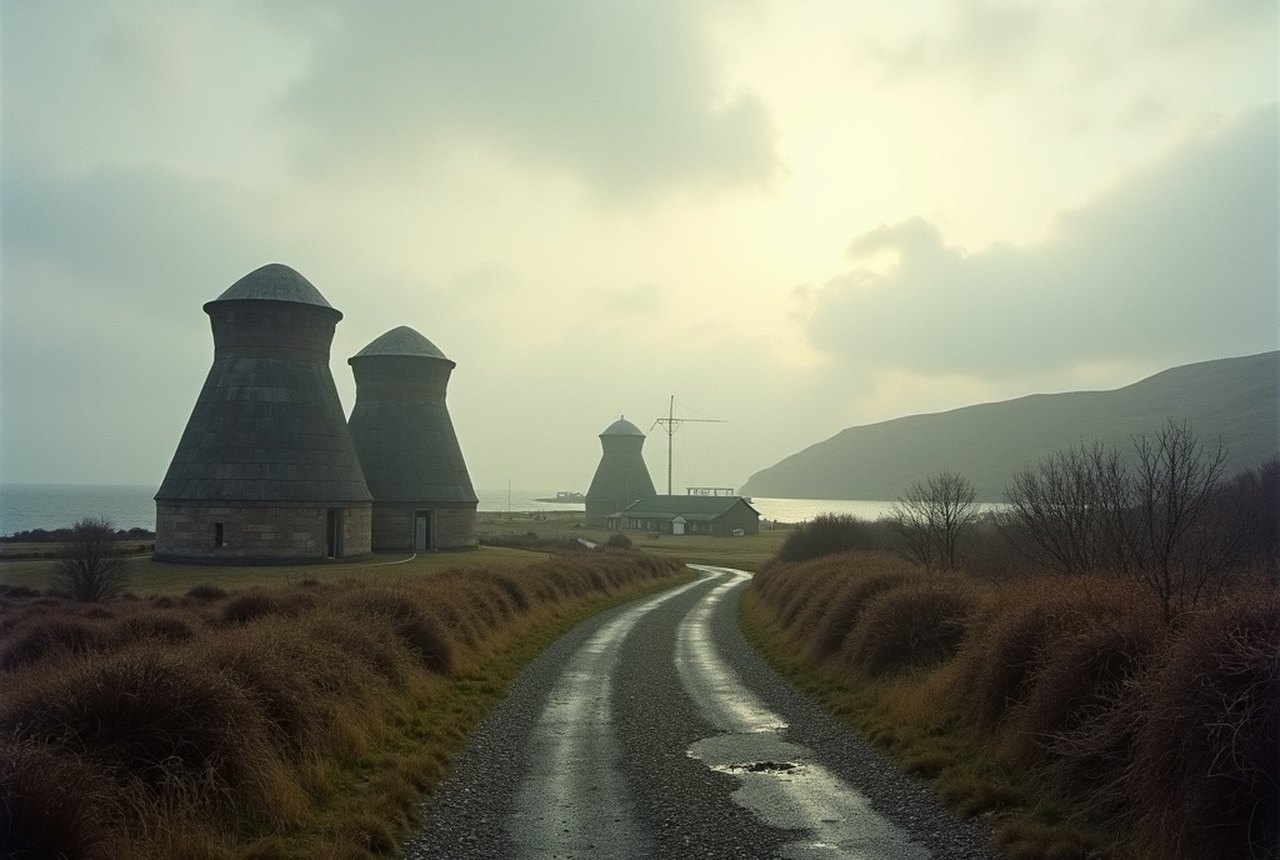
Coal extraction at Prestongrange generated vast quantities of fireclay alongside the coal itself, and the site’s industrialists were not inclined to waste it. The colliery brickworks became a substantial operation, producing the engineering bricks and firebricks demanded by the furnaces, flues and construction work of an industrialising country. The distinctive beehive brick kilns that survive on the site — circular, domed, designed to fire bricks with maximum efficiency — are among the most photogenic structures at Prestongrange and give the site some of its characteristic silhouette against the Forth.
The same raw materials supported a pottery. Prestongrange pottery produced utilitarian wares; this was not a fine-art enterprise but a working manufactory serving the everyday needs of a growing industrial and domestic market. The pottery’s output ranged from the commonplace to the functional, and its remains form part of the layered archaeology of the site. Visitors with an eye for the ground can trace, across the museum’s outdoor spaces, the overlapping footprints of industries that occupied the same acres at different moments — sometimes simultaneously — across many generations. Few industrial museums offer this density of superimposed activity on a single, unbroken site.
In brief — a chronology
- 1184Newbattle Abbey monks begin coal extraction on the Prestongrange foreshore
- 16th centuryReformation transfers ecclesiastical lands; site passes to secular ownership
- 1874Harvey and Company of Hayle supply and install the Cornish beam engine
- 1962colliery closes; engine ceases operation
- 1977Prestongrange opens as an open-air industrial heritage museum
| The monks’ working, 1184 | The Victorian colliery, 1874 | |
|---|---|---|
| Worked by | Cistercian monks of Newbattle Abbey | Colliery companies of the industrial age |
| The coal’s use | Firing salt pans on the foreshore | Feeding an industrialising country |
| Keeping out the sea | Shallow workings above the waterline | A 70-inch Cornish beam engine, pumping day and night |
| How it ended | The Reformation moved the ground to secular hands | The last shift, 1962 — the engine kept in place |
| Measure | Value |
|---|---|
| 1184 | first documented coal working at Prestongrange (Newbattle Abbey) |
| 1874 | year the Cornish beam engine was installed |
| 70 inches | diameter of the Cornish engine's cylinder |
| 1962 | year the colliery closed |
| 1977 | year Prestongrange opened as a museum |
§ VWhat the Museum Preserves
Prestongrange passed into the care of East Lothian Council following the closure of the colliery, and opened as a museum in 1977. It operates as an open-air industrial heritage site, which means that the machinery, structures and landscape are the exhibits, rather than objects removed to display cases. The approach suits the subject: Prestongrange’s significance lies precisely in its intactness and in the legibility of its landscape. The Cornish engine house, the brick kilns, the powerhouse, the surviving remnants of the colliery headworks area, and the wider grounds can be read together as a working ensemble — different in date and function but coherent as an industrial community’s accumulated response to the same piece of ground.
The powerhouse contains a collection of engines and industrial machinery that complements the beam engine outside, including a horizontal steam engine and examples of the smaller-scale machinery on which colliery and brickworks operations depended. Interpretation on site covers the social history of the mining community as well as the engineering history of the plant — the lives of the miners and their families, the conditions underground, the rhythms of the colliery village — setting the spectacular machinery in the human context it requires. Prestongrange was never merely a set of engines; it was a place where people worked and lived, and the museum is at its best when it holds both registers in view.
Community mining heritage is represented too through the Prestonpans murals — a series of external artworks around the wider area that draw on local history, though the museum itself remains the anchor for any serious engagement with what this shore once was and how it worked.
§ VIEight Centuries in a Single View
Standing on the edge of the Prestongrange site and looking out across the Forth towards Fife, it requires some effort of imagination to reconstruct the noise, the heat and the perpetual motion of a working colliery shore. The coal wagons, the winding gear, the steam, the salt-pans, the brick-kilns firing through the night — all of it has ceased. What remains is a stillness that is itself historically significant: a landscape arrested at the moment of closure, 1962, with roots reaching back to 1184.
That span of nearly eight hundred years is Prestongrange’s most extraordinary quality. Many industrial museums preserve the relics of a single era; Prestongrange shows, in one continuous place, the full arc of a pre-modern and modern extractive economy — from Cistercian monks cutting coal for saltpans on a medieval shore, through the great age of steam and the Cornish engineering tradition, to the nationalised colliery of the mid-twentieth century. The beam engine is the most dramatic single object, and rightly the site’s symbol, but the layering of salt, coal, brick and pottery across eight centuries is what gives Prestongrange its depth.
East Lothian is a county whose heritage tends to be measured in battles, harbours and high farming. Prestongrange insists on the other county — the industrial one, the one that burned and sweated and dug — and does so with the authority of genuine, continuous, well-documented history. No other site in East Lothian covers so much ground in both senses of the phrase.
The Cornish beam engine and its engine house are Scheduled Ancient Monuments; the grounds are free to walk.