How the Firth of Forth made East Lothian’s harbours rich, and what the barrel and the brine left behind
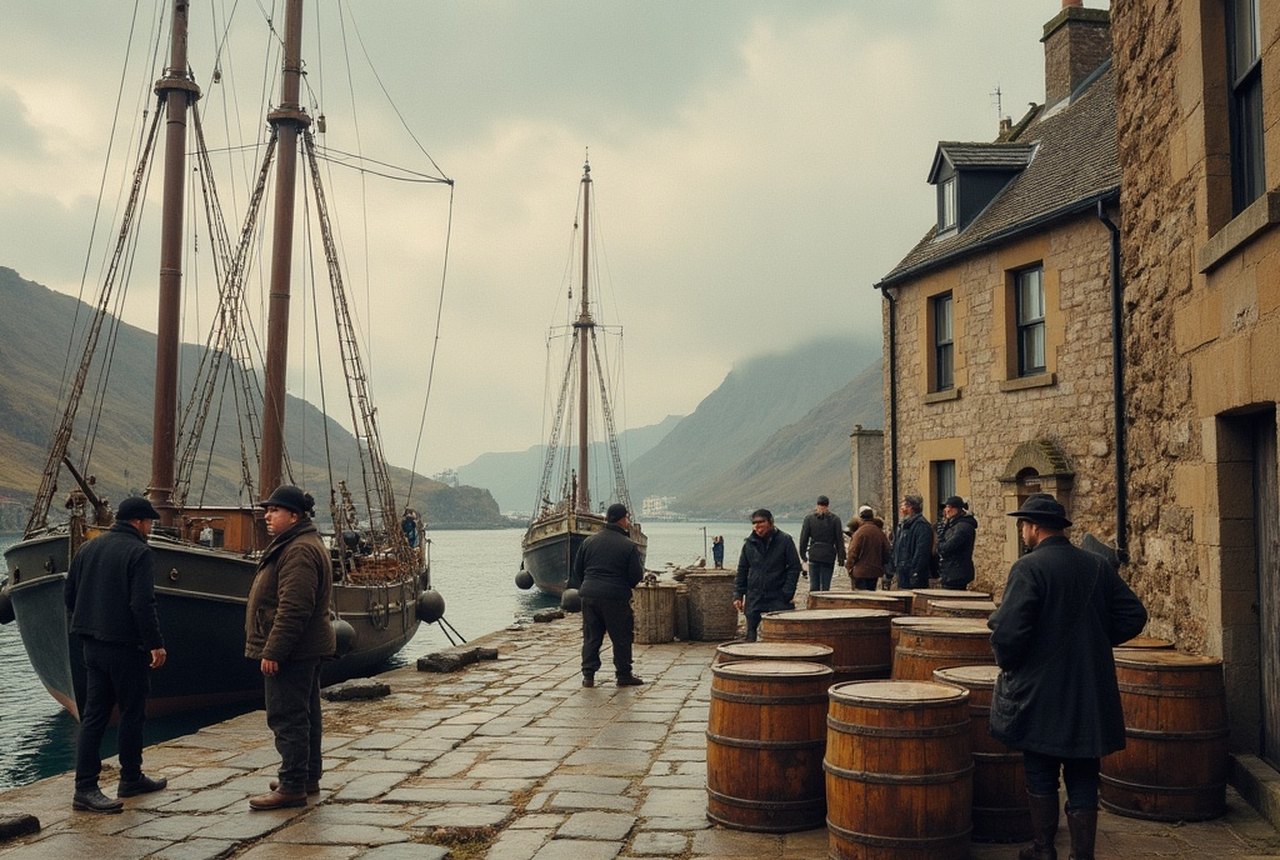
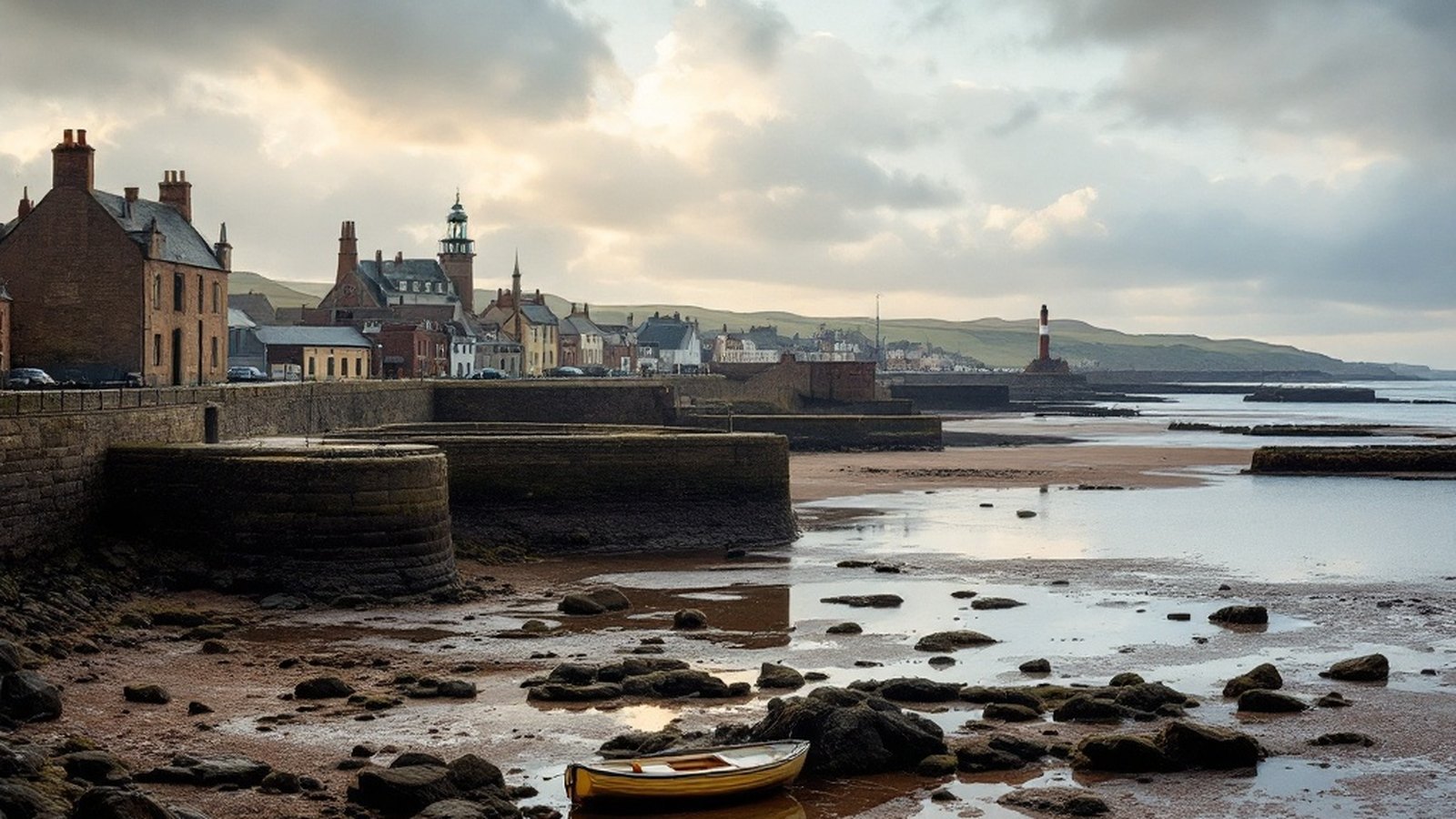
For a century and a half, the smell of salt and woodsmoke defined the working shores of East Lothian. Dunbar, the most significant of the county’s herring ports, drew fleets into its two ancient harbours — the Old Harbour, sheltered beneath Dunbar Castle’s red-stone ruins, and the adjacent Victoria Harbour, completed in 1842 — that at their peak handled hundreds of thousands of barrels of cured fish a season. Eighteenth-century Dunbar ranked among the leading herring stations on the east coast of Scotland, a position it held through the Napoleonic era and well into the Victorian boom, when the arrival of the railway in 1846 pulled the industry sharply inland towards urban markets and transformed what had been a largely local trade into something industrialised and international.
The fish themselves — Clupea harengus, following their ancient shoaling routes down the Forth — were taken by drift-net from open boats, later by the decked scaffie and then the larger Fifie, whose tall, straight stem became the silhouette of the herring era. Catches were landed, counted by the cran (a measure of roughly 37½ gallons of fresh herring), and moved with furious speed to the gutting yards before the fish could deteriorate. Time, always, was the enemy.
§ IIThe Fisher Towns
Behind each harbour stood a fisher row: a tight terrace of low cottages housing the families whose lives revolved entirely around the season. In Dunbar, the fisher community clustered near the harbour mouth, their existence governed by the rhythms of tide and shoal rather than clock or calendar. Women were central to the labour. The gutters — many of them travelling from further north, following the herring harvest down the coast from Wick to Yarmouth in an annual migration of skilled workers — worked in teams of three: two gutting at extraordinary speed, one packing. Their hands, wrapped against the salt and the knife-work in cotton cloots, could gut upward of fifty herring a minute. The barrels were packed in layers with dry salt between, sealed, and left to cure before inspection and export, much of it bound for the Baltic and the Catholic markets of continental Europe.
North Berwick had its herring interest too, though the harbour there — modest, tidal, backed by the Law — was always more concerned with local line fishing and latterly with pleasure boats. Cockenzie and Port Seton, further west along the shore, maintained a working fishing tradition deep into the twentieth century; Cockenzie’s harbour, overlooked for much of the modern era by the distinctive chimneys of the power station that replaced its industrial past, remained active long after the herring years had faded.
The decline was neither sudden nor simple. Overfishing of the North Sea herring stocks through the late nineteenth and early twentieth centuries, combined with shifting tastes, the disruption of two world wars, and the eventual collapse of the Baltic export trade, dismantled the industry piece by piece. By the mid-twentieth century the great seasonal migration of gutting crews had ended, the cooperages had closed, and the smell of woodsmoke and brine had left East Lothian’s shores for good.
Behind each harbour stood a fisher row: a tight terrace of low cottages housing the families whose lives revolved entirely around the season
In brief — a chronology
- 18th centuryDunbar established as a leading Scottish herring port
- 1842Victoria Harbour, Dunbar, completed
- 1846railway reaches Dunbar; herring trade industrialises
- Late 19th–early 20th centuryNorth Sea stocks decline; industry contracts
- Mid-20th centuryseasonal gutting crews cease; herring fishery effectively ends
§ IIIWhat Remains
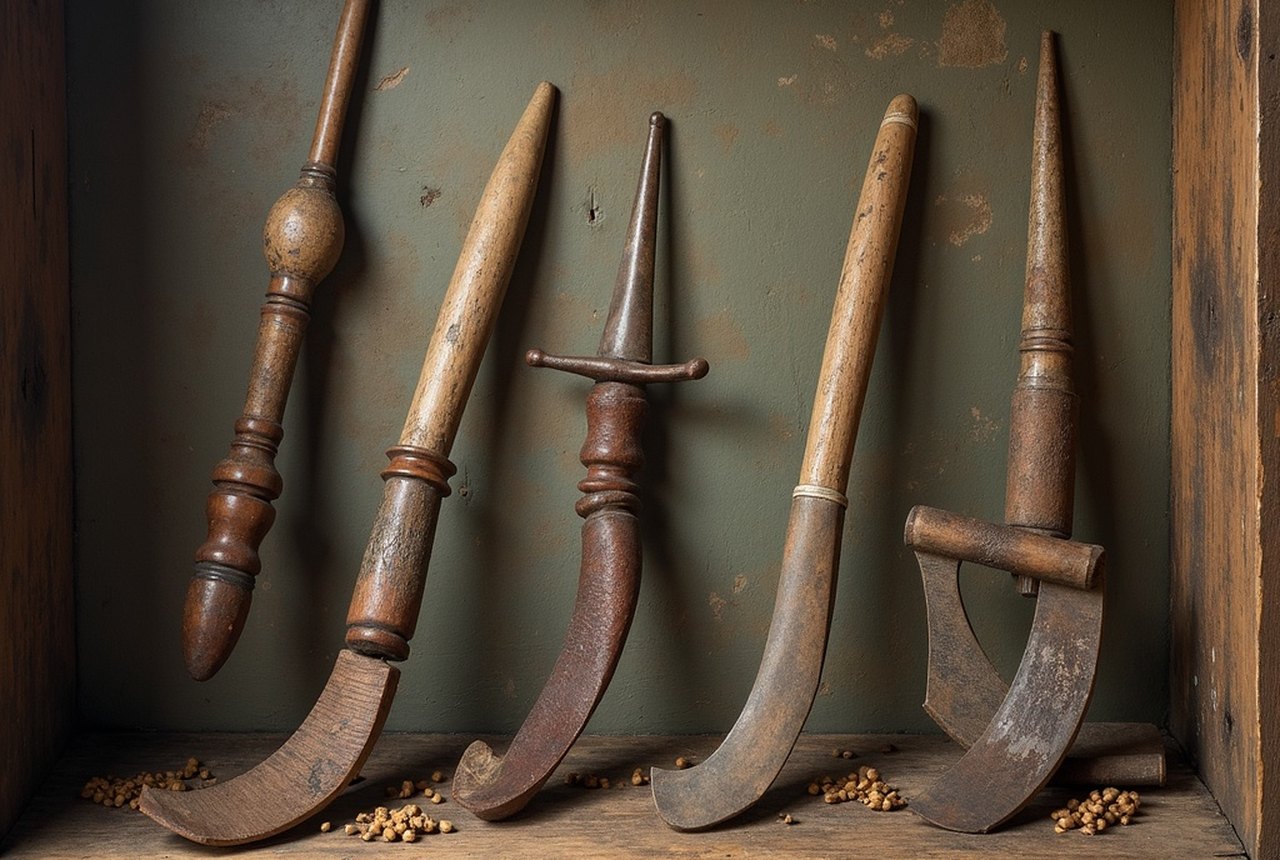
The Coastal Communities Museum at North Berwick holds much of what survives: the tools, the photographs, the oral histories, the material culture of the fisher families who gutted and packed and mended and waited. A gutting knife, a net-needle, a cooper’s adze — objects whose plainness speaks more directly than any formal exhibit about the conditions of the work. The museum draws on the collections and communities of the entire East Lothian coastline, stitching together the fragmented evidence of a world that left few written records and trusted instead to memory and repetition.
Dunbar’s Victoria Harbour still shelters small craft. The stonework is old, the proportions generous, built for a trade that no longer exists. Stand there on a winter morning, tide running, and the harbour makes a kind of argument in silence: that the silver the herring brought was real, was briefly abundant, and is now entirely gone.