§ IA County Town and Its Records
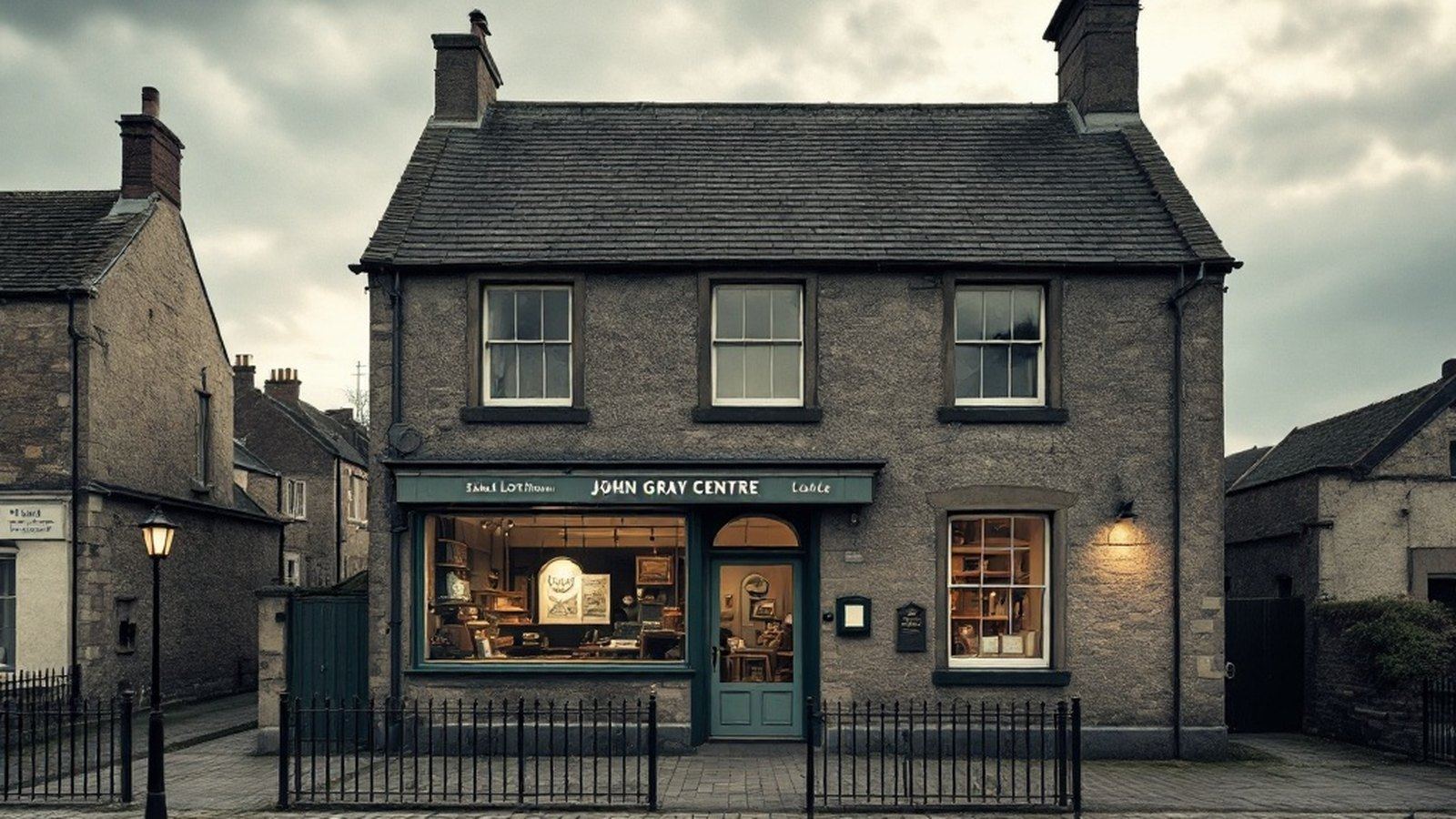
Haddington sits on a bend of the Tyne eight miles inland from the Firth of Forth, and it has been the administrative heart of East Lothian — or Haddingtonshire, as the county was formally styled — for centuries. The medieval street plan is largely intact: the High Street, the Market Street, the long back-land plots that once fed burgess households, and the collegiate church of St Mary’s still closing the view eastward across the river. It is a town that has generated paperwork in proportion to its importance, and the John Gray Centre, which opened in 2013 on Lodge Street, is where that paperwork now lives — properly housed, properly catalogued, and genuinely accessible.
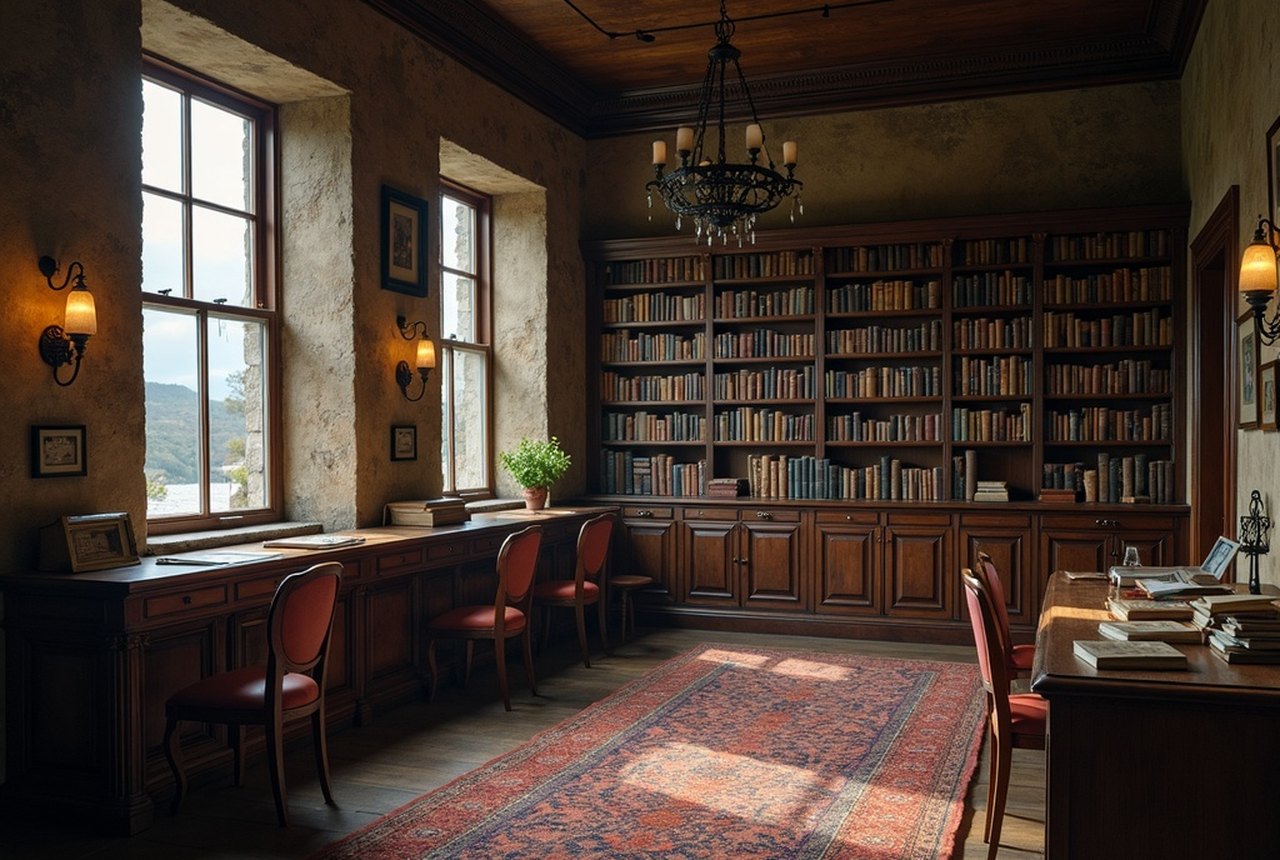
The centre brings together three things that are often kept apart: a local-history museum, a public library, and the East Lothian Local History Centre, which holds the county archive. The combination is rarer than it sounds. Most county archives occupy a basement or an out-of-town repository; most local museums mount displays but cannot show you the documents behind them. At the John Gray Centre, the reading room and the exhibition space share a building, which means a visitor can move in a morning from a glass case holding an eighteenth-century grain measure to a searchroom table holding the estate ledger that records what that measure was used to weigh.
§ IIWhat the Archive Actually Holds
The East Lothian Local History Centre holds council records running back centuries, alongside kirk session minutes, school board papers, valuation rolls, estate maps, and the records of the industries that shaped the county — the coal workings around Tranent and Prestonpans, the fishing communities of Dunbar and Port Seton, the market-garden economy that made the coastal strip between Dunbar and Musselburgh one of the most productive stretches of agricultural lowland in Scotland. These are not curios. They are the primary sources from which East Lothian’s history is, in the most literal sense, constructed.
The photographic holdings deserve particular mention. The centre holds thousands of images of the county’s towns and countryside across the nineteenth and twentieth centuries — harbours, high streets, harvest fields, school classes, football clubs — a visual record that complements the written one and that is increasingly digitised and searchable. For anyone trying to understand how Haddington or North Berwick or Dunbar actually looked and functioned before the age of mass photography, this is irreplaceable material.
Family historians form a significant part of the readership, and the centre caters to them without condescending to them. The statutory registers, the census returns and the old parochial records are available here as elsewhere through ScotlandsPeople, but the archive adds depth that no national database can supply: the estate papers that record an ancestor’s tenancy, the school log that notes a child’s attendance and conduct, the burgh records that place a tradesman in a specific close in a specific year. East Lothian was, for much of its history, a county of in-migrants as well as out-migrants — agricultural improvers bringing in workers from other counties, industrial expansion drawing labour from Ireland and the Highlands — and the archive reflects that complexity.
They are the primary sources from which East Lothian’s history is, in the most literal sense, constructed
In brief — a chronology
- Medieval eraHaddington established as county town of Haddingtonshire
- 2013John Gray Centre opens on Lodge Street, combining archive, library and museum
§ IIIWhy a Working Archive Matters
The case for housing archive and museum together is ultimately a case about context. Objects without documents are interesting; documents without objects can be impenetrable; together, each illuminates the other. The county’s agricultural revolution of the eighteenth century is visible in the farming implements displayed in the museum; it is explicable through the improving leases and factor’s correspondence held in the archive. Neither version of the story is complete alone.
The John Gray Centre is named for an early eighteenth-century minister of the town who left his books to it — a fitting choice for a building that takes local knowledge seriously. It is open to the public as a working institution, not a heritage attraction in the theme-park sense: the reading room is a place where research happens, where questions get partial answers and partial answers generate further questions, which is precisely what an archive is for. East Lothian is a county whose history repays serious attention. This is the right place to begin paying it.