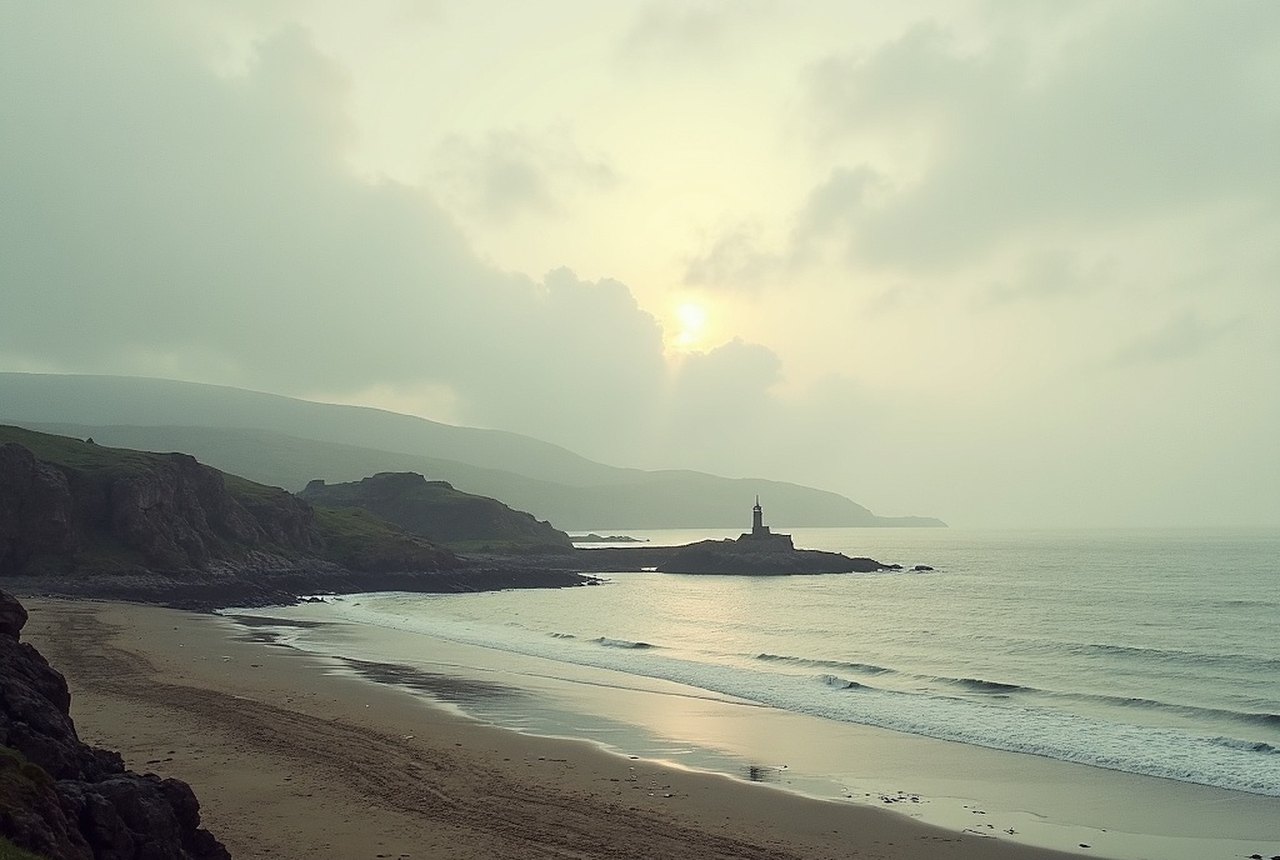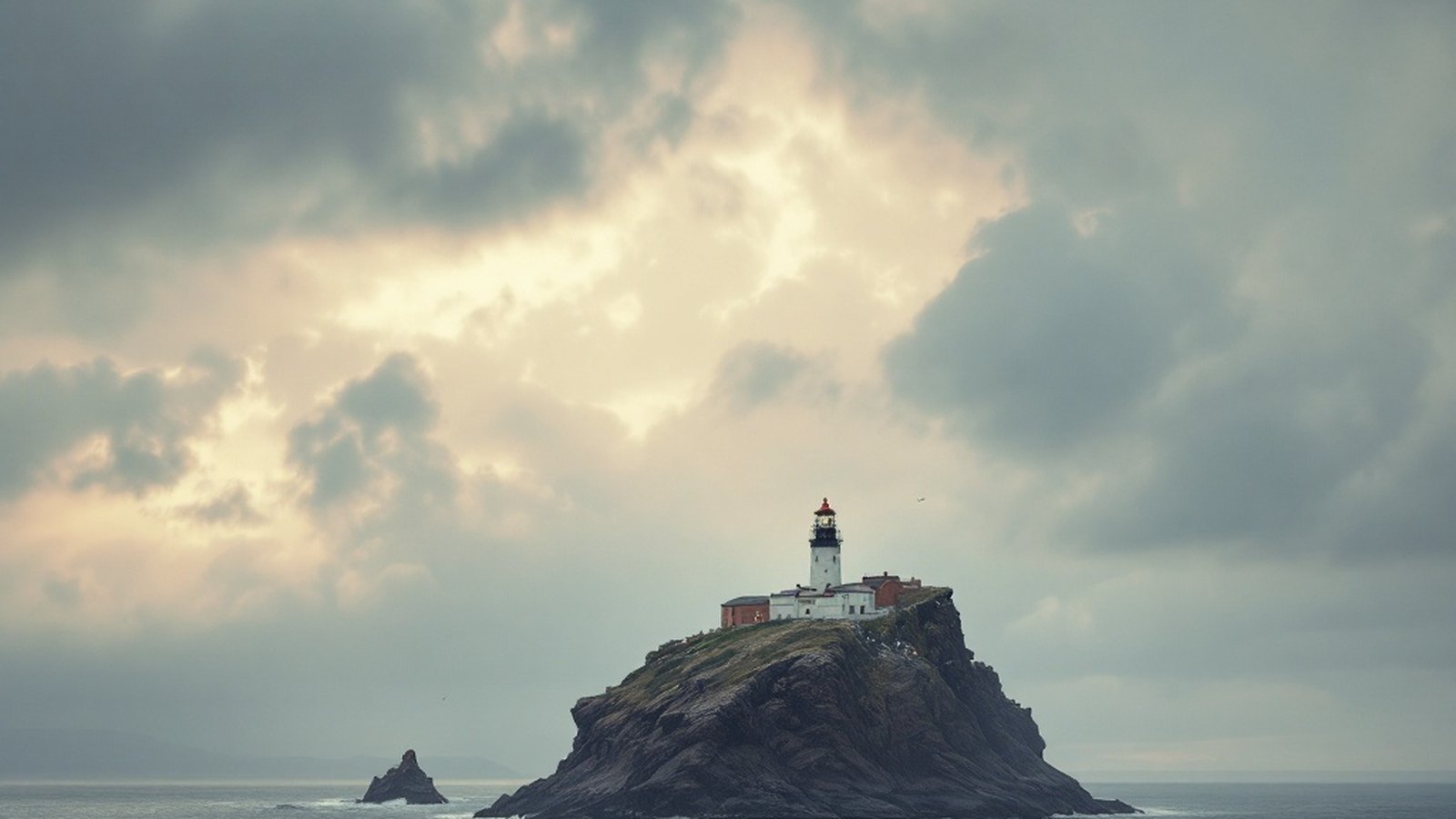
From the Isle of May to Barns Ness, the lighthouses of the Firth of Forth are monuments to a dynasty of engineers — and to the men who kept the flame.
The Firth of Forth is not a gentle sea. Its outer reaches are scattered with skerries, its tides run hard, and its weather can turn from clear to murderous in an afternoon. It was this coastline — and dozens like it around Scotland — that gave the Stevenson family their life’s work. For four generations, from Robert Stevenson in the early nineteenth century through his sons Alan, David and Thomas, and then David’s son David Alan, the Northern Lighthouse Board’s engineering work was effectively a family practice. Thomas Stevenson’s son, born in Edinburgh in 1850, would become Robert Louis Stevenson the writer; but the family he grew up in built lights, not novels.
The Isle of May, standing some five miles off the Fife coast in the outer Firth, carries one of Scotland’s oldest lighthouse histories. A coal-fired beacon burned here from 1636, maintained by private interests and notoriously unreliable. The Northern Lighthouse Board replaced it in 1816 with a proper masonry tower, designed by Robert Stevenson — the same engineer who had lately completed the Bell Rock lighthouse off Arbroath. The Isle of May light guided ships into the Forth’s main channel and warned against the May Island’s own cliffs. Today the island is a National Nature Reserve, managed by NatureScot, and its seabird colonies — puffins, razorbills, the occasional shearwater — far outnumber its human visitors; the lighthouse stands automated and unmanned, its character flashing over an empty keeper’s cottage.
§ IIRock, Reef and Gannet
Closer to East Lothian’s shore, the Bass Rock rises from the Firth like a stopped fist of volcanic basalt. Its lighthouse, operational since 1902, was another Stevenson-office commission, the work of David Alan Stevenson. Perched at the southern foot of the rock, the white tower shares its platform with what is now the world’s largest single-rock colony of northern gannets — some hundred thousand birds in the breeding season, their guano whitening the cliff faces to a state that can be seen from the shore at North Berwick. The keepers who served at Bass Rock occupied one of the most dramatically situated stations in Scottish waters; automation came in 1988, and the rock now belongs to its gannets and to the day-trippers from North Berwick harbour who circle it by boat in summer.
Fidra, the small island just off Yellowcraigs beach west of North Berwick, carries a lighthouse built in 1885, also by David Stevenson. The island’s jagged outline and its lonely station are traditionally said to have planted the seed of Treasure Island in Robert Louis Stevenson’s imagination — he knew these waters from childhood. Whether or not the literary connection holds, Fidra’s light guided vessels through the shoal-ridden inshore passage north of the East Lothian links. The island is now an RSPB reserve; the lighthouse, like all of these, works without a keeper.
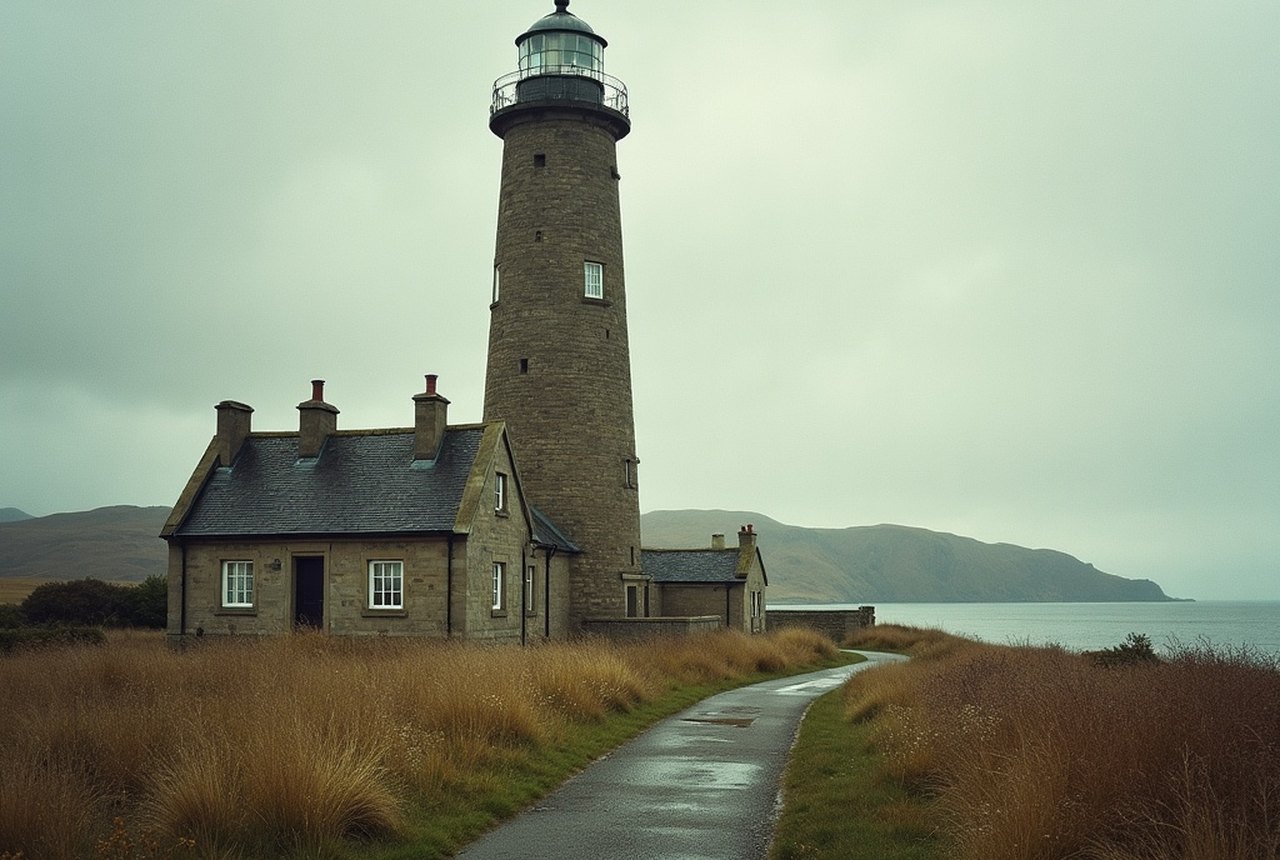
Barns Ness lighthouse, south of Dunbar near the county’s eastern boundary, is the most approachable of the group — a white-painted tower completed in 1901 and set in a landscape of lime-works and wave-cut platform. The adjacent cottages have been converted to holiday accommodation, which gives the curious visitor a chance to sleep within earshot of a working light station. Its beam sweeps across a coast that once saw considerable coastal traffic: coal from the Lothian pits, fish from Dunbar harbour, and the constant movement of vessels working up-firth toward Leith and Grangemouth.
Closer to East Lothian’s shore, the Bass Rock rises from the Firth like a stopped fist of volcanic basalt
In brief — a chronology
- 1636coal-fired beacon established on the Isle of May
- 1816Northern Lighthouse Board replaces it with Robert Stevenson's masonry tower
- 1850Robert Louis Stevenson born in Edinburgh
- 1885Fidra lighthouse built
- 1901Barns Ness lighthouse completed
- 1902Bass Rock lighthouse operational (David Alan Stevenson)
- 1988Bass Rock light automated
- mid-1990sautomation completed across most Scottish lighthouse stations
§ IIIThe Keepers' World
The life of a lighthouse keeper on the Forth was defined by routine, isolation and a precise professional pride. The Northern Lighthouse Board ran a tight operation: logbooks were kept, equipment was maintained to standard, and relief boats ran to schedule where weather allowed. On the rock stations — Bass Rock, Isle of May — keepers served rotations away from their families, dependent on supply vessels and subject to weeks of enforced confinement in bad weather. Automation, completed across most Scottish stations by the mid-1990s, ended that world entirely. The lights still turn. The logbooks have gone to the archives.