East Lothian’s coastal plain has fed Scotland’s capital for centuries — a breadbasket, a seed bed, and a stock country rolled into one small county.
The phrase is old and earned. East Lothian’s reputation as Scotland’s pre-eminent market garden rests on a fortunate convergence of geology, climate and aspect that its neighbours can only envy. The coastal plain stretching between Musselburgh and Dunbar sits in the rain shadow of the Lammermuirs, drier than almost anywhere else in Scotland and open to the east wind that, while bitter in January, also keeps late frosts moving. Beneath it lies a deep, workable tilth — boulder clay overlaid with alluvial loam, steadily improved over three centuries of improving landlords and diligent tenantry. The earls of Haddington and their like may have been remembered for planting policies of Scots pine, but it was the quiet annual rotation of their tenant farmers that turned this into some of the most productive arable land in Britain.
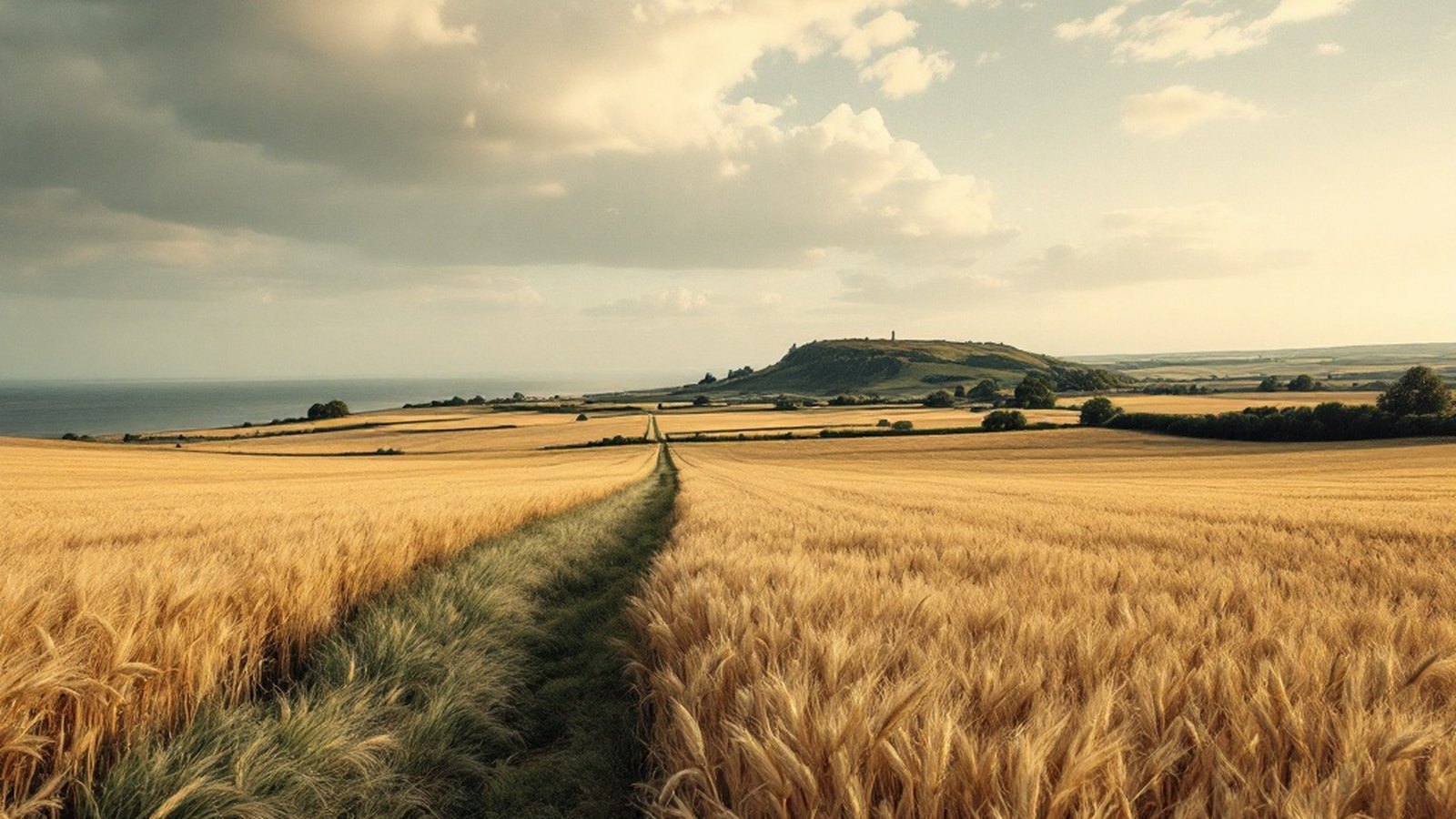
The staple has always been grain. Wheat and barley have been grown here since the medieval period, and the county’s farms supplied Edinburgh through hard winters when the Lothian roads were impassable to cattle. The barley persists: Belhaven Brewery at Dunbar, brewing since 1719, draws on the county’s malting barley tradition, and the brewery’s survival into the present day is as good an index as any of the consistency of the local harvest. Oats, once the dominant cereal of the Scottish diet, have largely given way to winter wheat and high-yielding spring barley, the landscape around Athelstaneford and East Linton turning gold by late July on a reliable schedule.
§ IISeed Potato Country
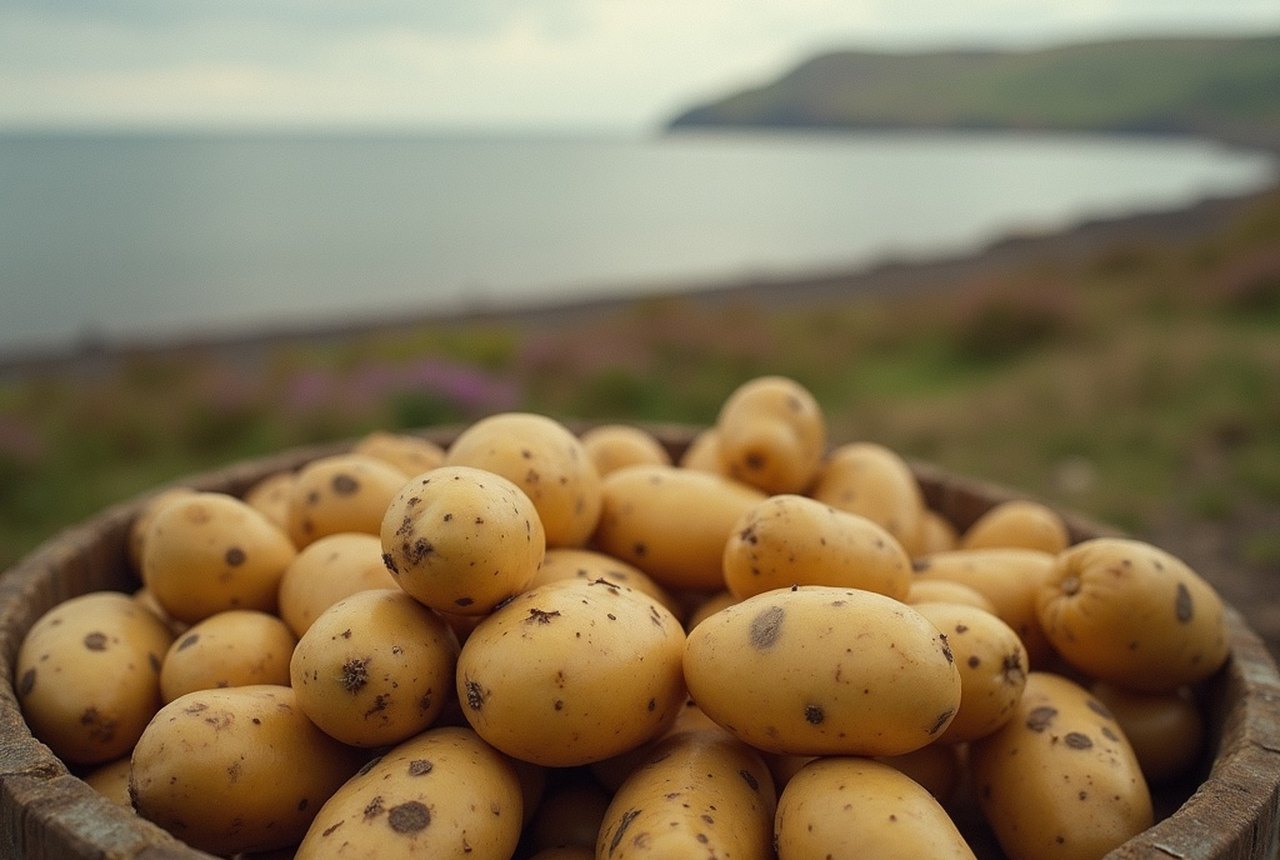
If the grain fields are the county’s foundation, the potato crop is its distinction. East Lothian is one of Britain’s foremost seed-potato-producing regions, a status built on the same dry climate and clean soils that discourage the aphid-borne virus diseases that undermine seed stock elsewhere. The farms around Haddington, Tranent and the lower slopes above the Firth of Forth have supplied certified seed potatoes to growers across the United Kingdom and beyond for well over a century. This is not a heritage curiosity but a live trade: the county’s seed potato business is a specialist, technically exacting enterprise, dependent on rigorous classification and inspection schemes that trace back to government certification programmes of the twentieth century.
Soft fruit occupies the lighter, freedraining soils of the coastal fringe — strawberries and raspberries in polytunnels and open beds, the picking season drawing seasonal workers as it has for generations. Market gardening in the literal sense — field vegetables, salad crops, brassicas — concentrated historically along the coastal strip between Prestonpans and North Berwick, and the county’s proximity to Edinburgh gave its growers a metropolitan market that rewarded quality and earliness.
If the grain fields are the county’s foundation, the potato crop is its distinction
§ IIIFrom the Hill and the Sea
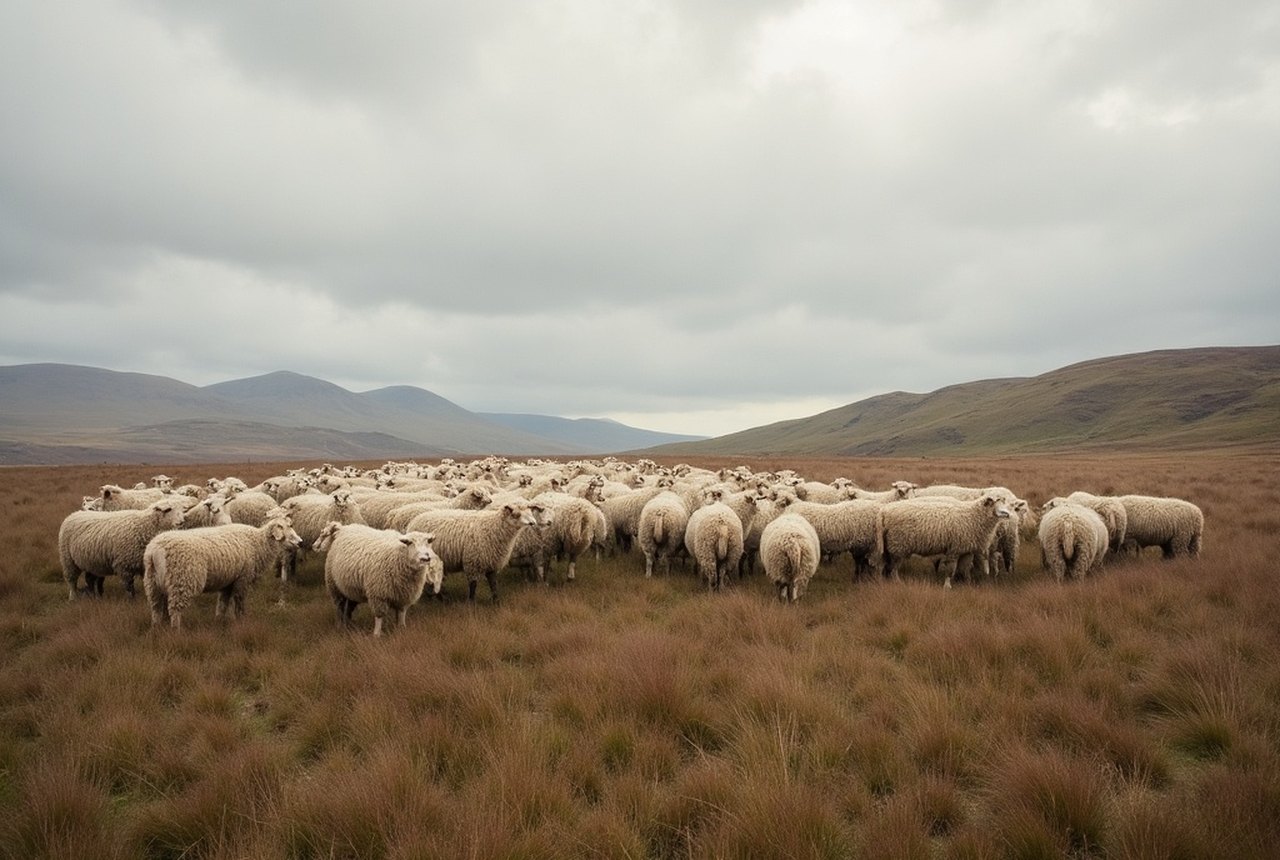
The Lammermuirs behind the plain offer a different kind of produce. The hills carry sheep in the old way: Cheviot and Blackface flocks on unfenced ground above the five-hundred-foot contour, producing a lamb that is unhurried, hill-hardened and flavoured by the moorland grazing. Lammermuir lamb has long been regarded as among the best in southern Scotland, the meat closer in character to Welsh mountain lamb than to lowland breeds, and the auction marts at Haddington processed substantial numbers of hill lambs each autumn, many destined for butchers across central Scotland.
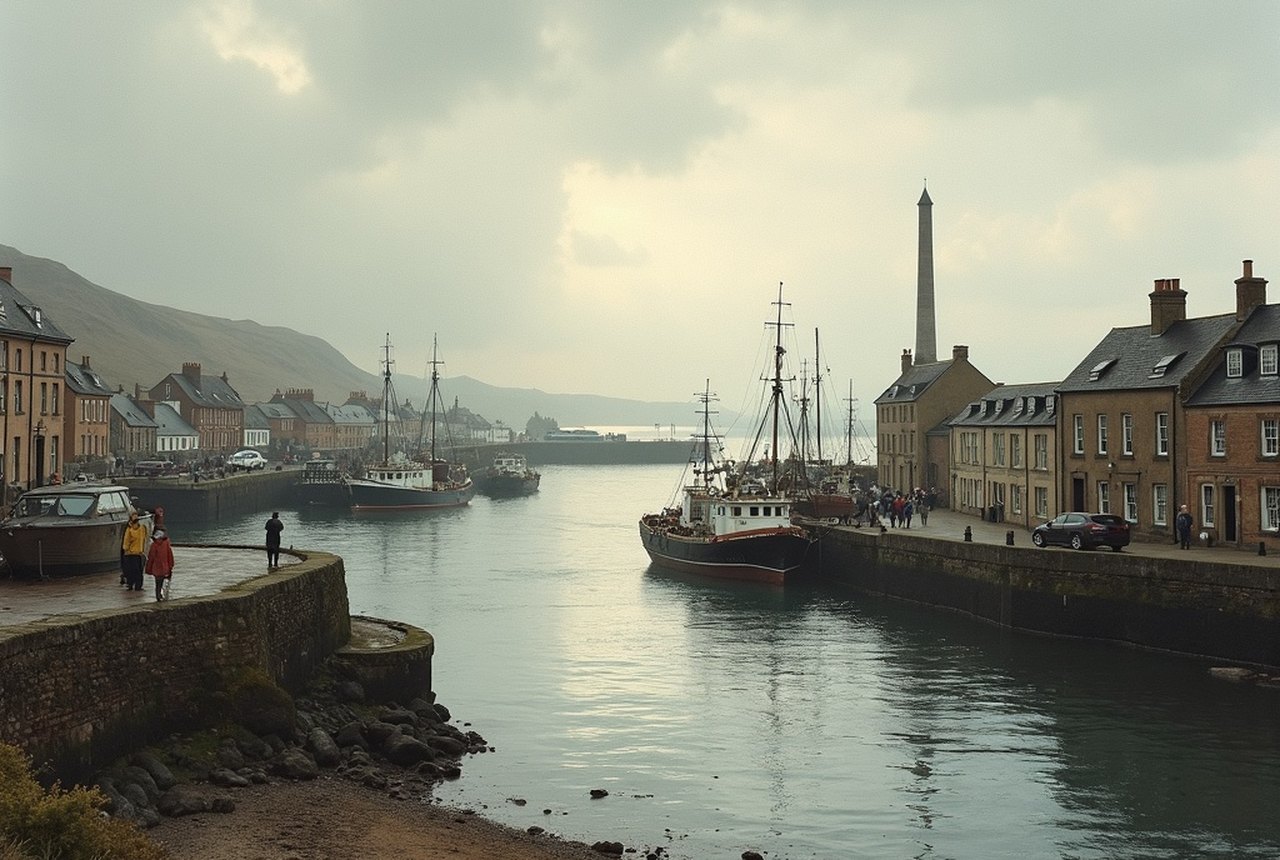
The sea adds its own column to the county’s larder. The herring fishery that once animated Dunbar, North Berwick and the smaller havens is long gone as a commercial force, but brown crab, lobster and inshore whitefish are still landed at Dunbar harbour, and the county’s coastal restaurants — working close to genuinely local supply — are among the better arguments for staying the night rather than passing through. The Firth of Forth’s cold, clear water is also the environment that gave the county its oysters, historically, and there is quiet contemporary work on that front too.
What the county table offers, assembled honestly, is this: real bread grain, distinguished seed stock, hill-grazed lamb, shore-caught seafood, and a brewing tradition of genuine longevity. The market garden metaphor, for all its familiarity, hardly does it justice.